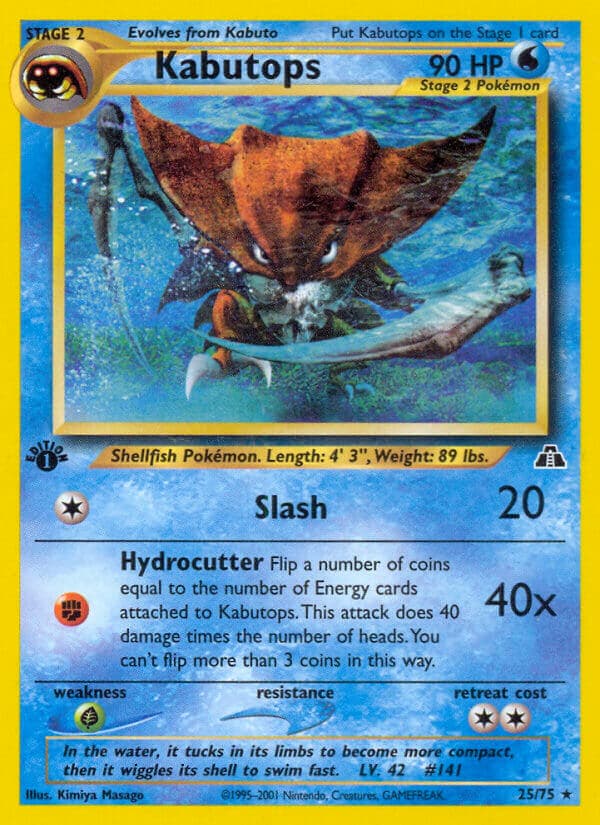
Neo Discovery·#25·2000
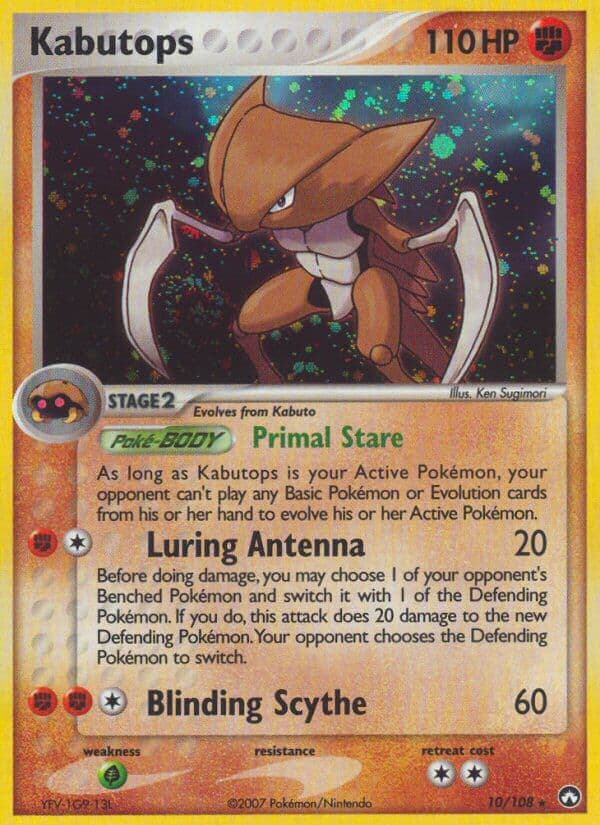
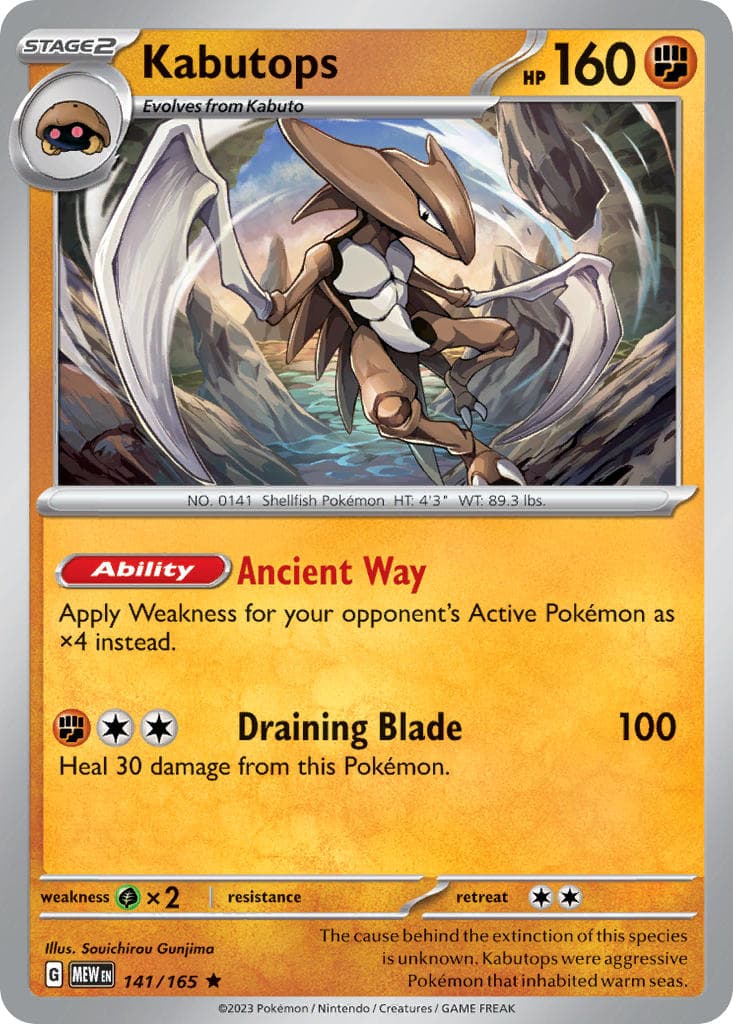
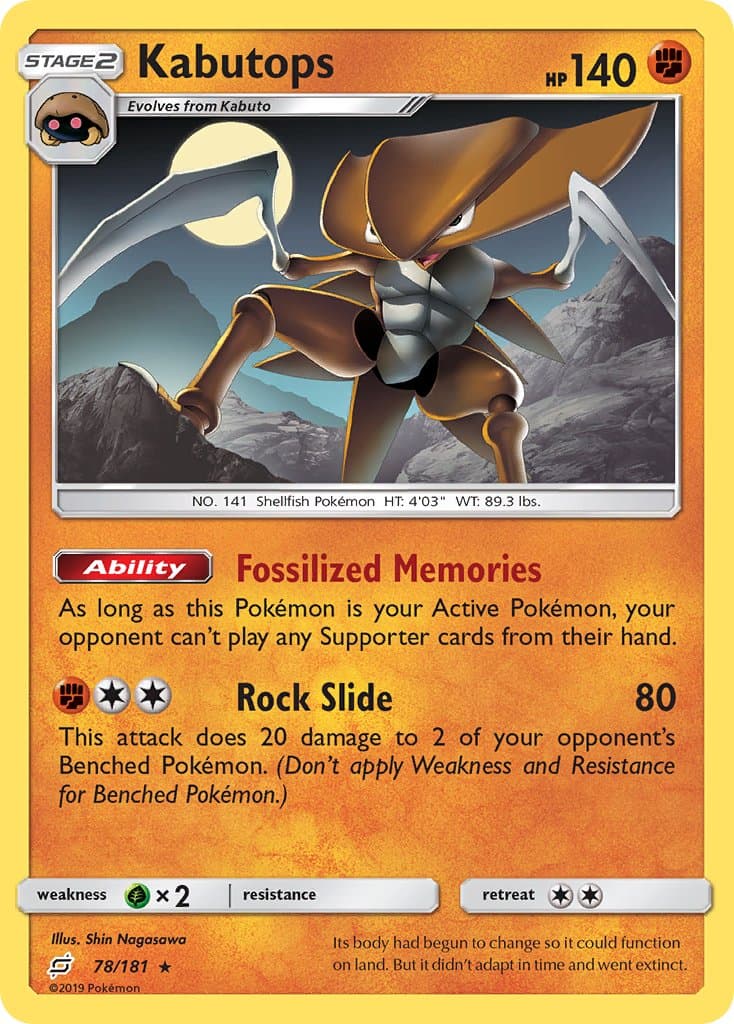
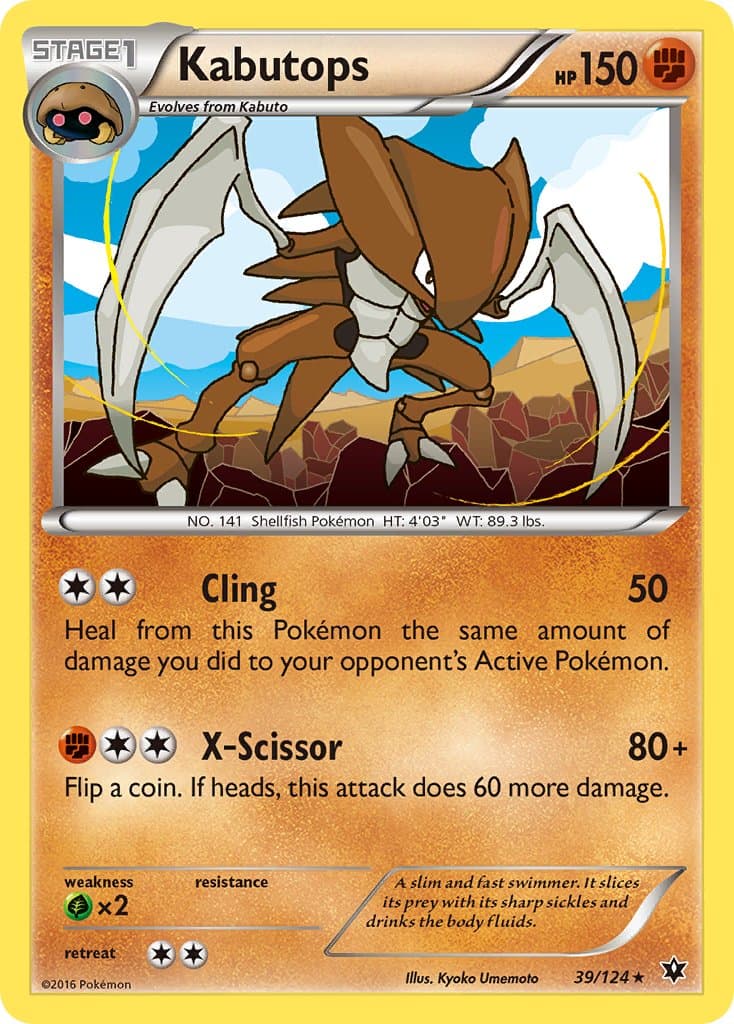
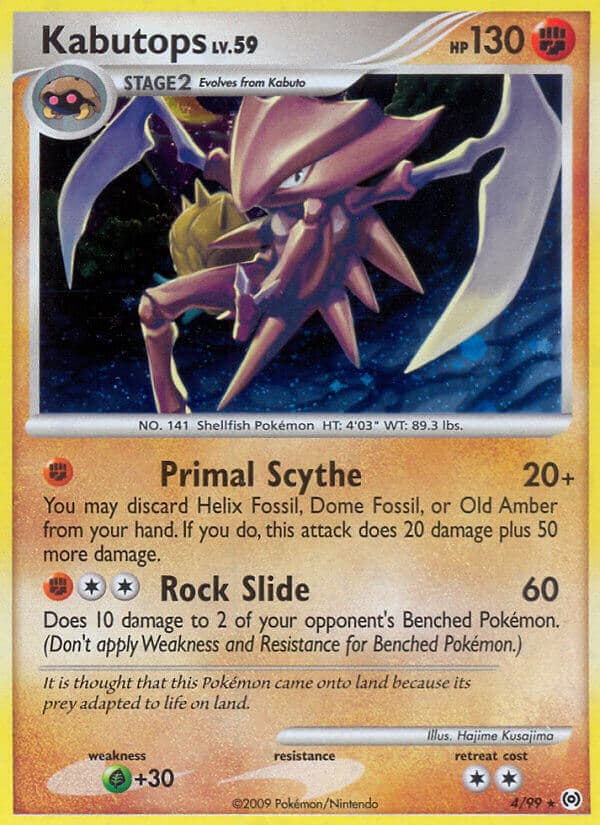
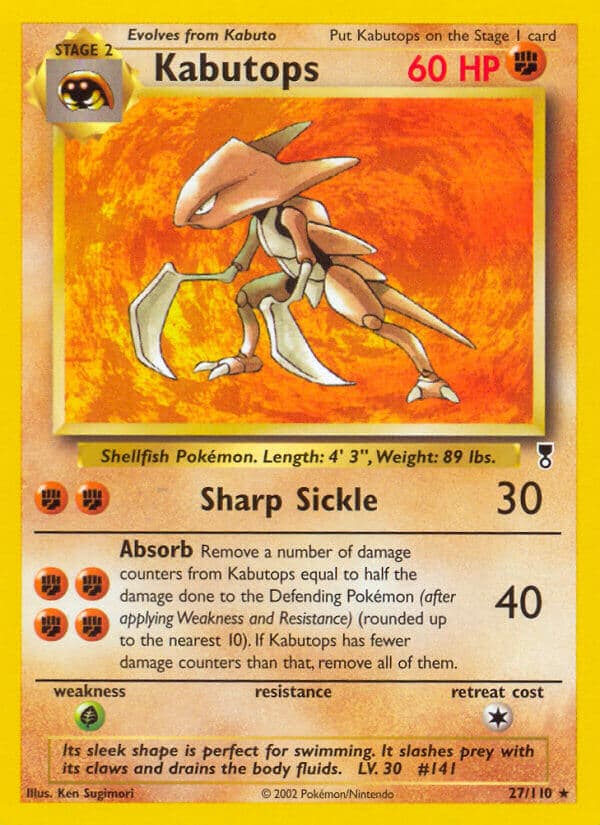
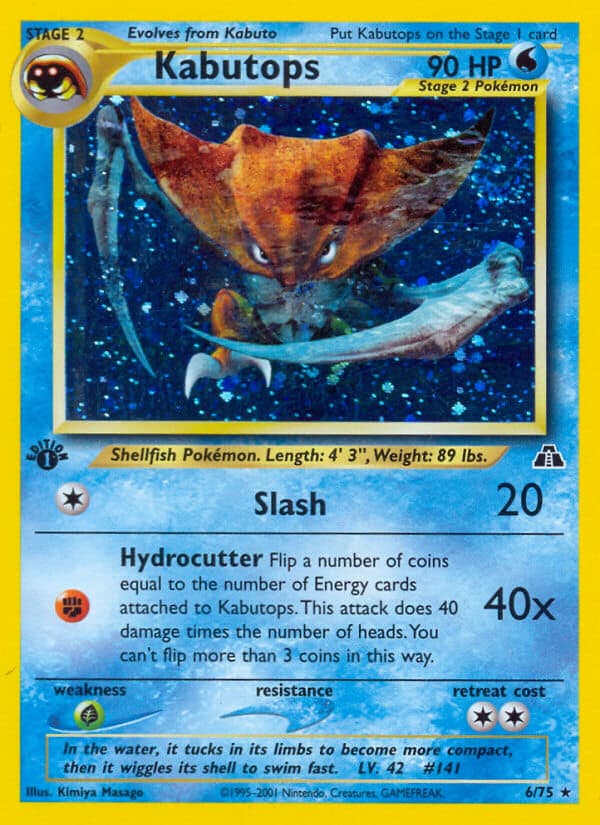
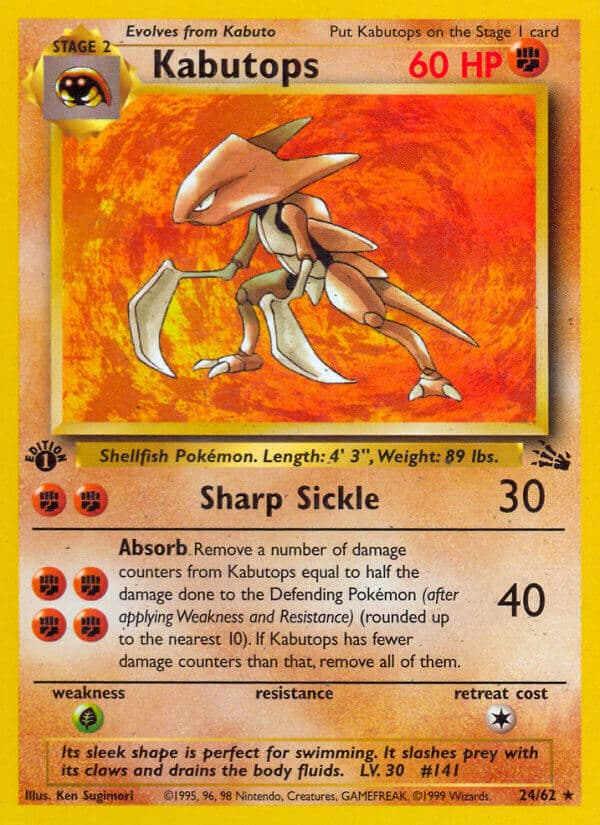
Kabutops, a Rock/Water type from Generation I, is the formidable final evolution of the ancient Kabuto, revered for its predatory design and historical significance in the Pokémon world. This specific 1st Edition Kabutops from the 2000 Neo Discovery set stands out as a rare, non-holographic variant, embodying the charm and mechanics of an early TCG era. Here, visitors will find detailed Pokédex lore, a breakdown of its attacks—Slash and Hydrocutter—including their energy costs, and an overview of its weakness and the card's edition history.
Read more ↓Kabutops is a dual-type Rock/Water Fossil Pokémon, originally introduced in Generation I. It is the final evolution of Kabuto, evolving from the Stage 1 form. Kabutops is based on the extinct arthropod *Anomalocaris*, a predatory creature from the Cambrian period, known for its raptorial appendages and segmented body. In the Pokémon world, Kabutops is depicted as an ancient, aquatic predator, perfectly adapted for hunting in prehistoric seas. Its scythe-like claws are incredibly sharp, allowing it to slice through prey with ease. Fossilized Kabuto specimens can be revived into living Pokémon, offering a glimpse into the distant past. In the games, Kabutops is often found in areas like the Cinnabar Island Pokémon Lab after players revive a Dome Fossil. Its role in the anime often highlights its ancient origins and formidable predatory nature. Type-wise, as a Rock/Water Pokémon, Kabutops has resistances to Fire, Ice, Flying, Normal, and Poison types, but is vulnerable to Electric, Grass, Fighting, and Ground types, with a double weakness to Grass. Its unique combination of types and design has made it a memorable figure among fans of ancient Pokémon.
Last updated: April 11, 2026