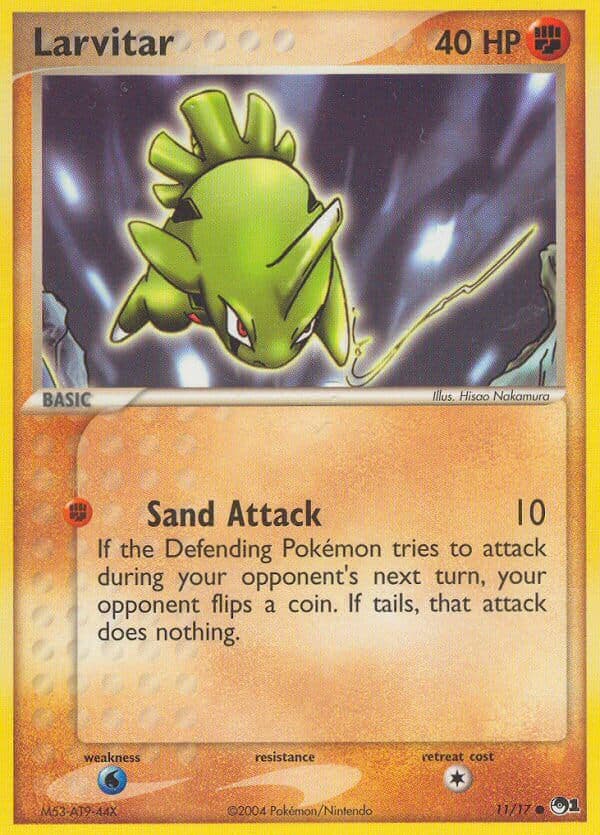
Pop Series 1·#11
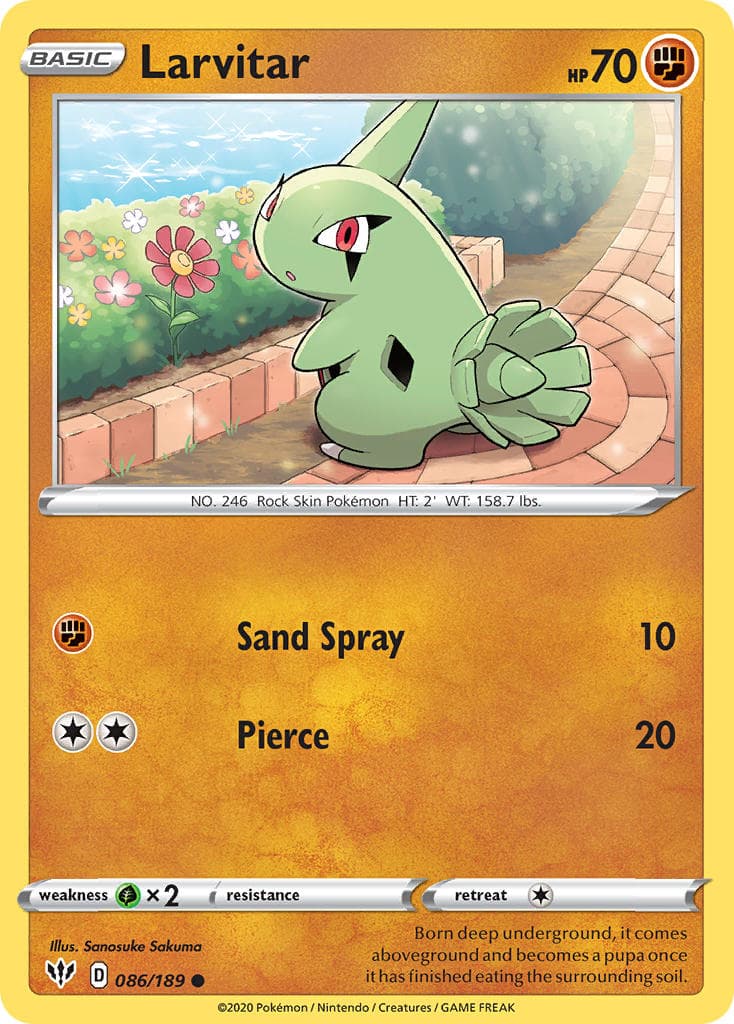
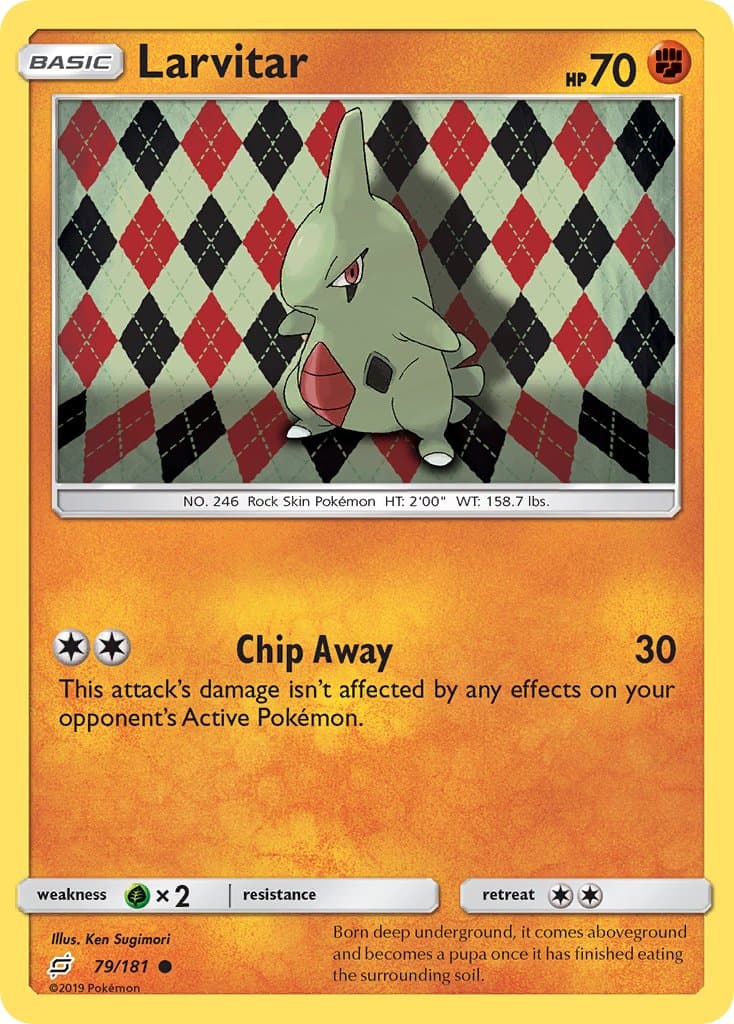
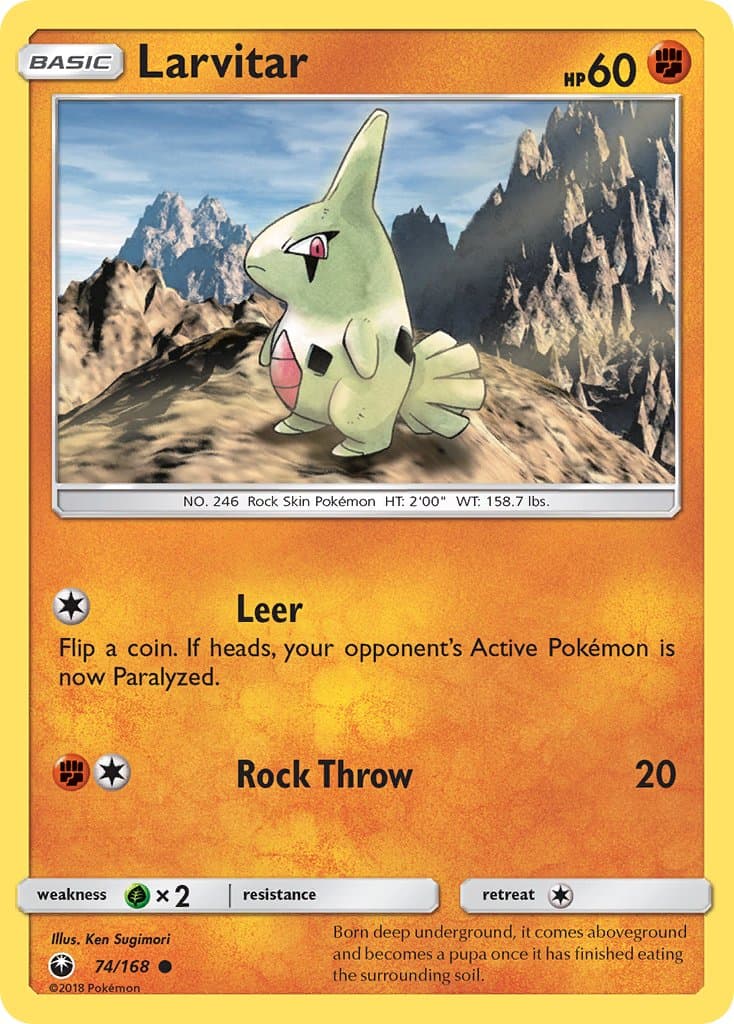
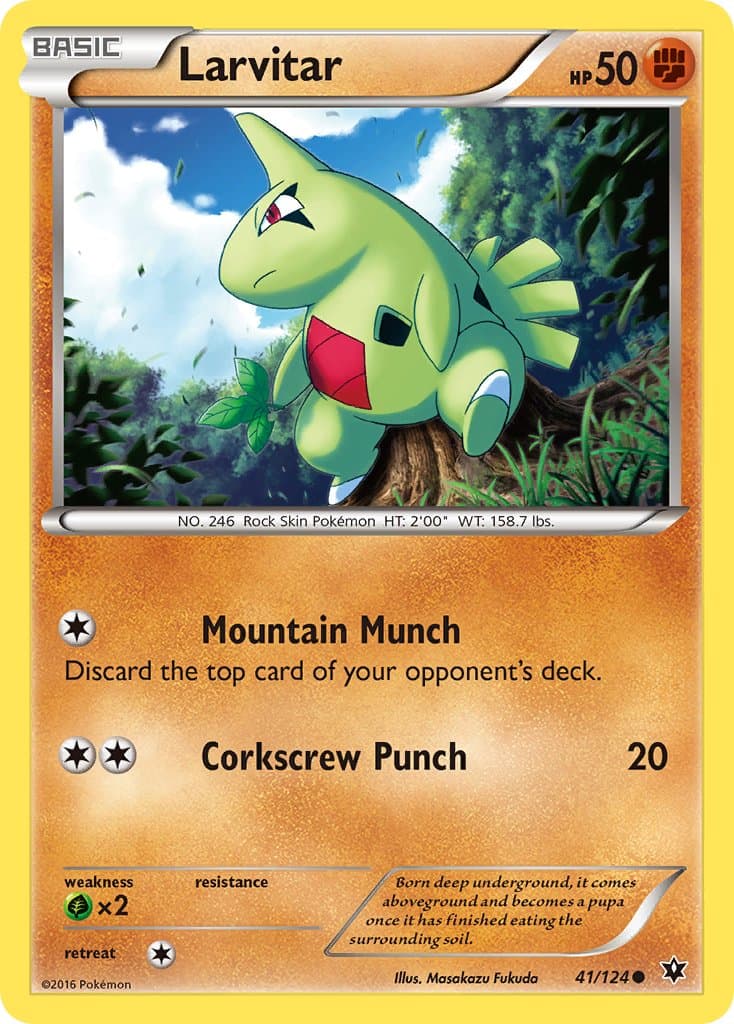
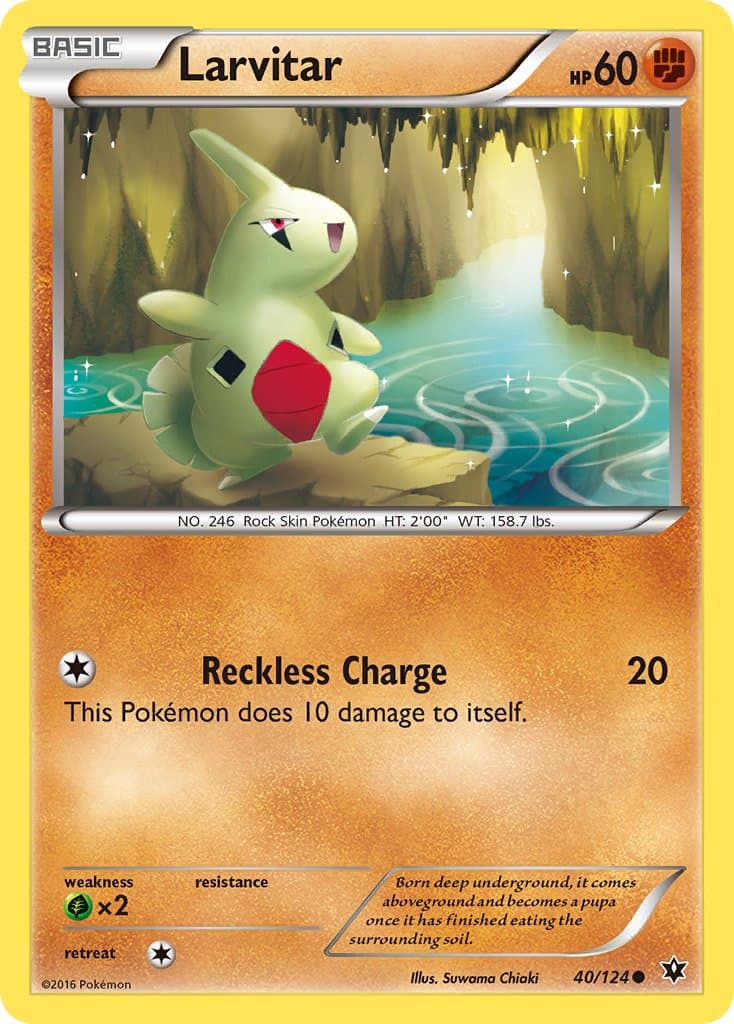
Larvitar, the Rock Skin Pokémon, is a beloved Rock/Ground type from Generation II, renowned for its evolution into the mighty Tyranitar and its deep connection to the earth. This specific Larvitar card from the Pop Series 1 set, released in 2004, is a common promotional variant distinguished by its unique distribution and illustrative artwork. Here, you'll discover Larvitar's Pokédex lore, the card's mechanics including its 40 HP, Sand Attack, weakness, and retreat cost, along with its edition history.
Read more ↓Larvitar is a Rock/Ground type Pokémon introduced in Generation II, making its debut in the Johto region. Known as the Rock Skin Pokémon, it begins its life deep underground, often hatching from eggs laid in mountainous areas. Its diet primarily consists of soil, which it rapidly consumes to grow, eventually eating entire mountains. This voracious appetite and the constant grinding of rocks help shape its hardened skin, which is tough enough to withstand significant impact. Larvitar evolves into Pupitar, and then into the formidable pseudo-legendary Tyranitar, a powerful dark/rock type known for its destructive capabilities and imposing presence. In the games, Larvitar is often found in late-game areas, requiring significant effort to obtain and train due to its slow experience gain early on. Its evolutionary line plays a significant role in the lore of the Pokémon world, often depicted as forces of nature capable of reshaping landscapes. In the anime, Ash and friends encounter various Larvitar, highlighting their journey from vulnerable hatchlings to powerful creatures. Larvitar’s initial vulnerability and eventual strength resonate with many fans, symbolizing growth and potential.
Last updated: April 11, 2026