Market Price
$7.44
Low
—
High
—
PSA 10
$2.68
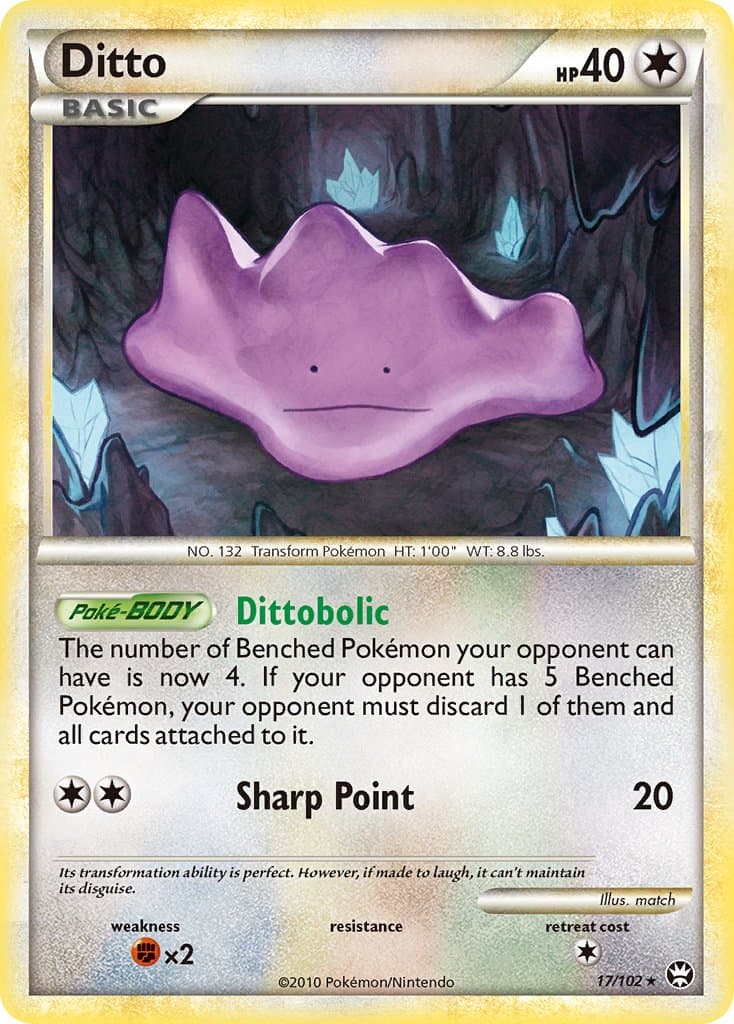
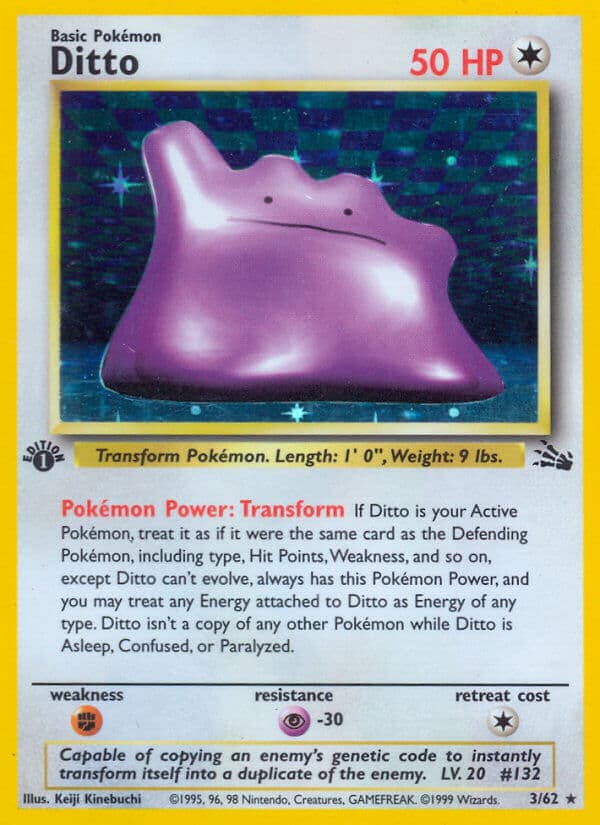
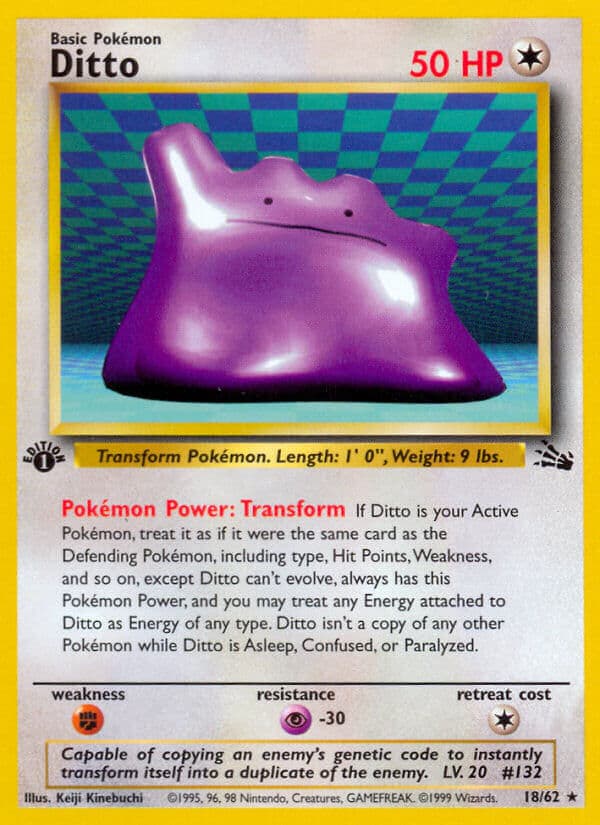
Ditto
Fossil·#18·1999
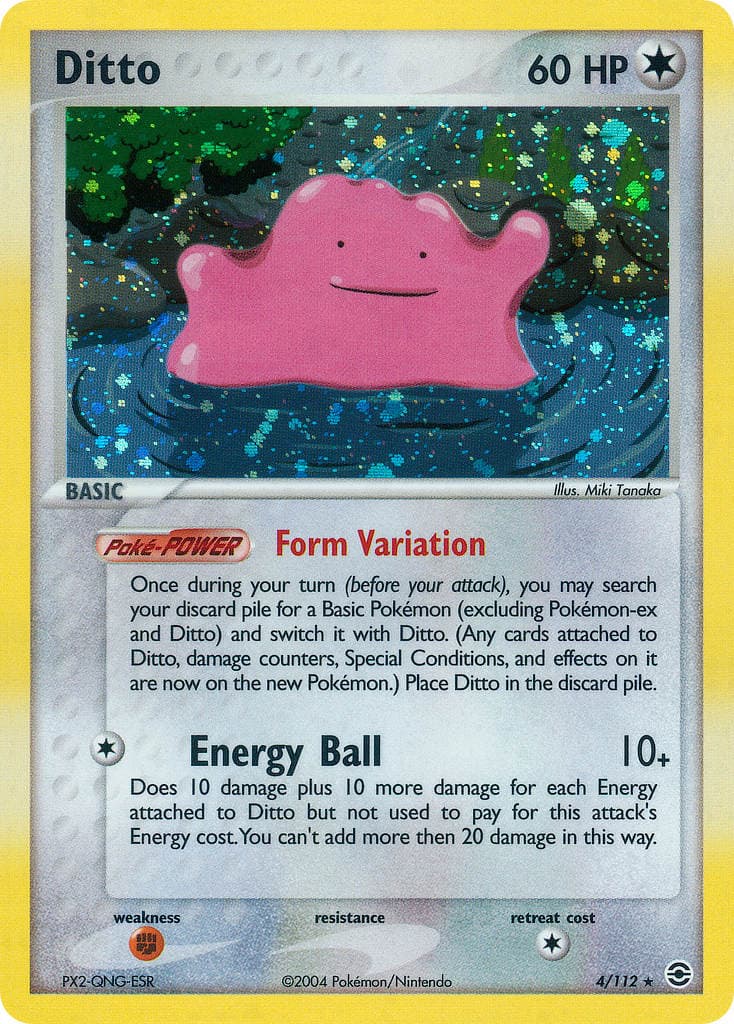
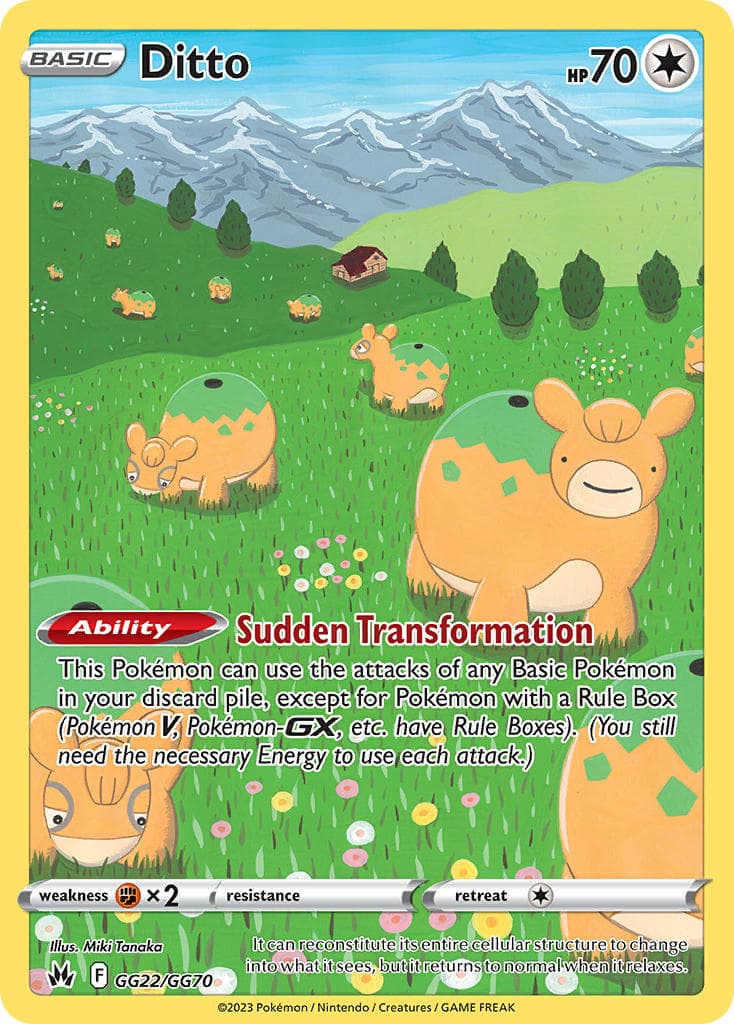
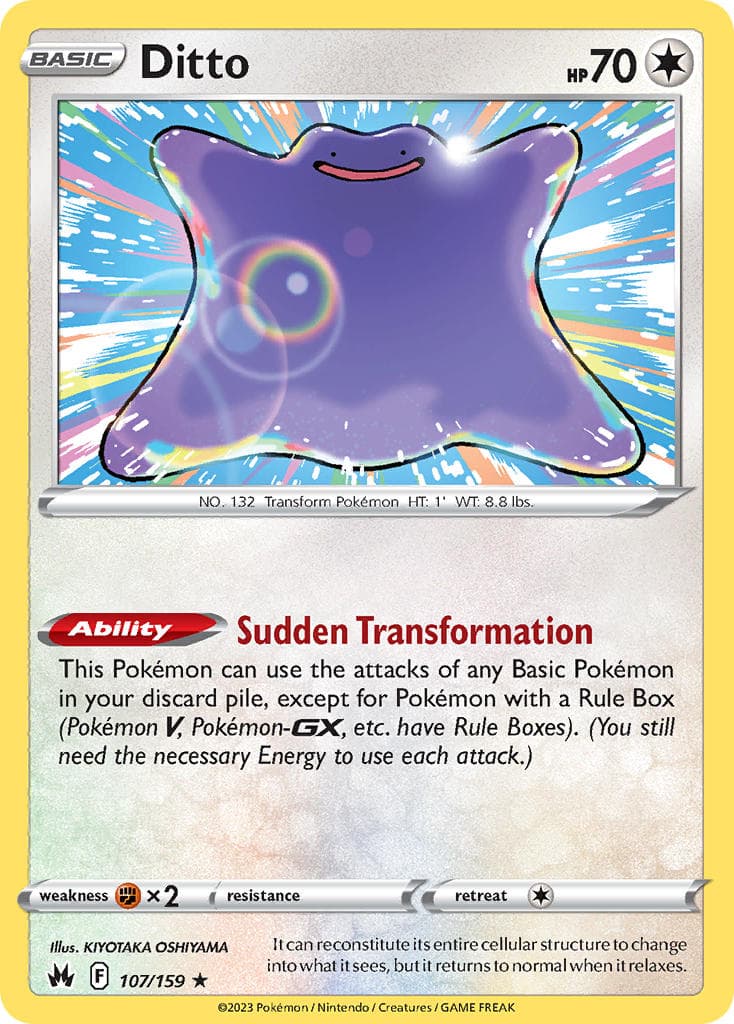
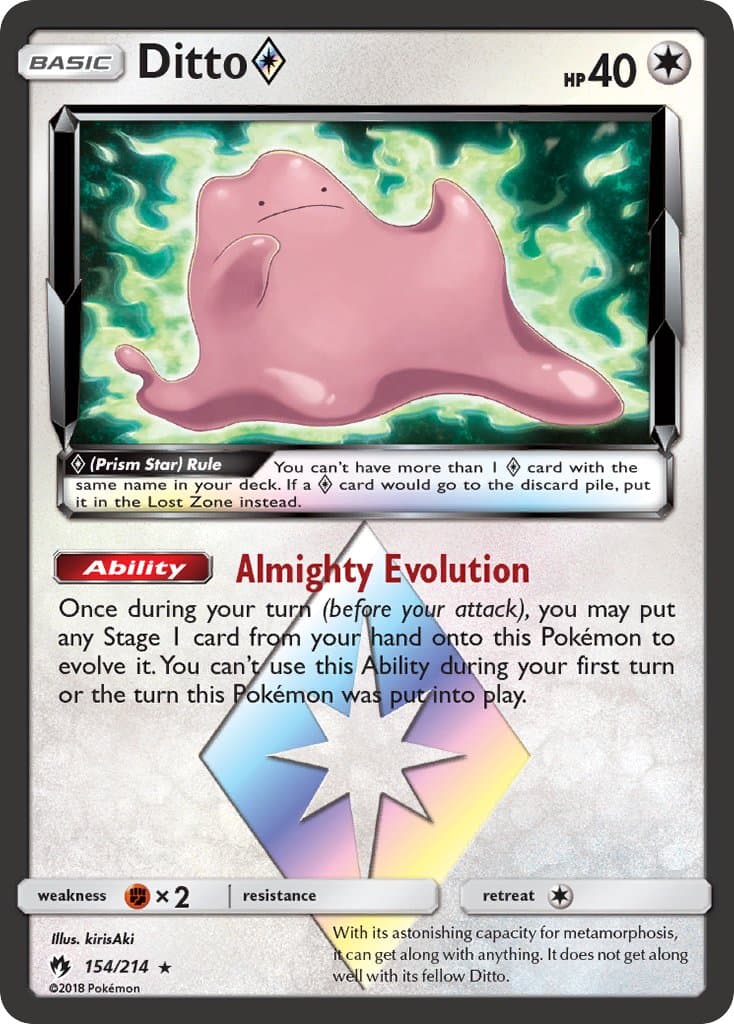
Ditto, the Transform Pokémon, is a Normal-type creature introduced in Generation I, famous for its unique ability to mimic any other Pokémon, making it a beloved and iconic part of the franchise. This specific card from the 1999 Fossil set is a rare holographic variant, standing out with its captivating artwork and intriguing mechanics that capture Ditto's essence. Here, visitors will discover Ditto's fascinating Pokédex lore, its card's specific HP, attack details with energy costs, weakness, and a comprehensive history of this particular edition.
Read more ↓- Card Number
- #18
- Release Date
- October 9, 1999
- Language
- EN
- Set Code
- fo
Ditto is a peculiar Normal-type Pokémon first introduced in the Kanto region, making its debut in Generation I. It is renowned for its unique biological makeup, which allows it to perfectly transform into any object or living creature it sees, including other Pokémon. This ability is not just a visual trick; Ditto can perfectly replicate the abilities, moves, and even the stats of its chosen form. Its natural habitat is not well-defined, as it can adapt to almost any environment by mimicking its surroundings, though it is often found in areas with a rich diversity of other Pokémon. Ditto's diet is also flexible, as it can assume the form of a predator or prey to sustain itself. In the games, Ditto is invaluable for Pokémon breeding due to its ability to breed with almost any Pokémon, making it a staple in competitive breeding strategies. In the anime, it often appears in comedic roles, sometimes struggling with imperfect transformations, adding to its charm. Ditto has no evolutionary line, existing as a standalone Pokémon. Its unique type allows it to be neutral against most elemental types, but it is weak to Fighting-type attacks. Ditto's cultural significance lies in its versatility and endearing simplicity, representing the potential for adaptability and transformation within the Pokémon world.
Price History
Last updated: April 7, 2026